
ENZUZO
Building a Privacy Compliance Website Scanner
Building a website privacy scanner for entrepreneurs by understanding their audience and solving problems through thoughtful design.
SKILLS
E2E Process
UX Design
Visual Design
Product Vision
ROLE
Product Designer
TIMELINE
Feb 2023 - April 2023
WHAT DOES ENZUZO DO?
Enzuzo is a privacy compliance platform that helps businesses manage legal policies, cookie consent, and data protection requirements.
THE PRIVACY COMPLIANCE SCANNER
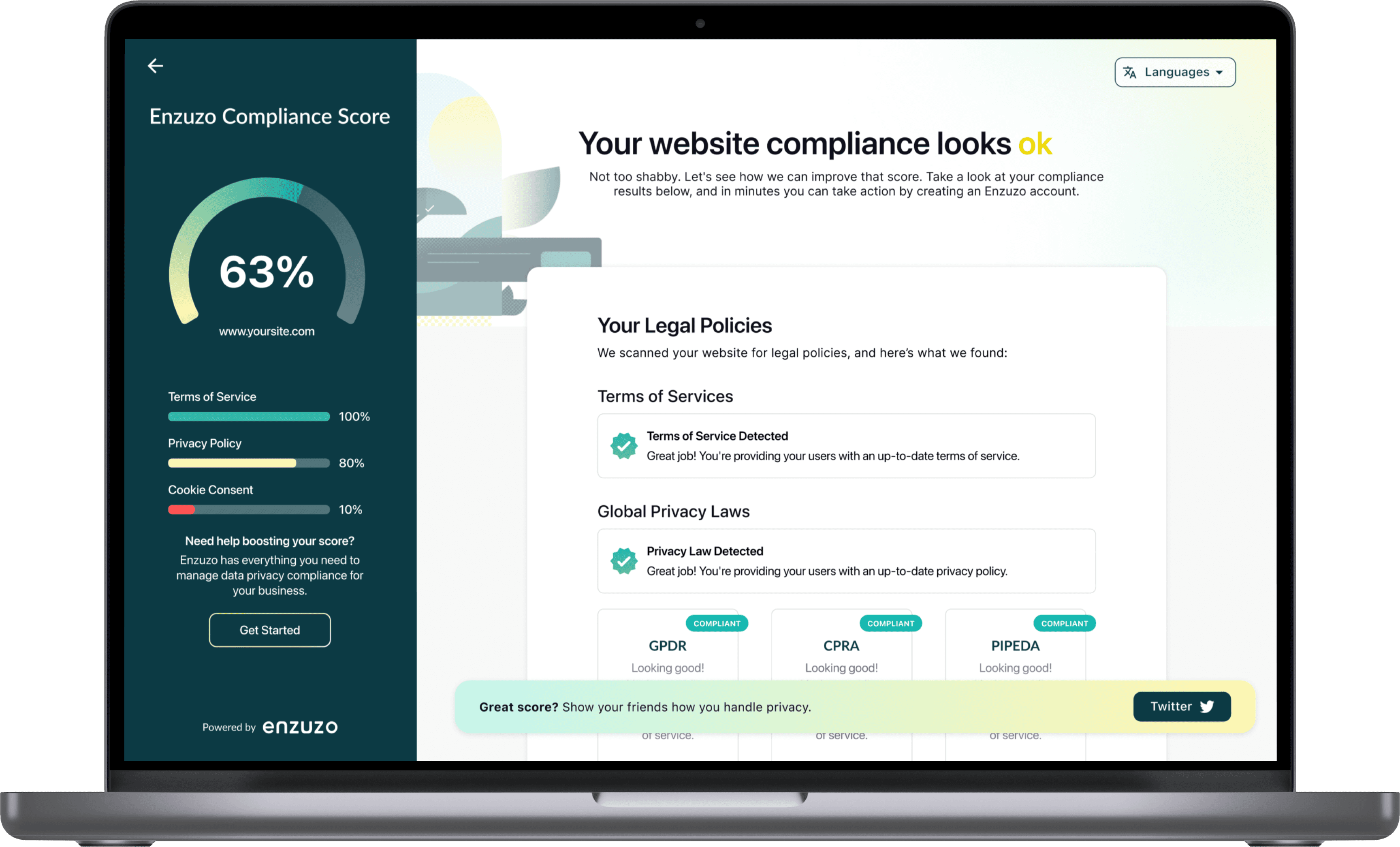
I spearheaded the design and product vision of their newest product, working alongside another product designer and the engineering team. Ultimately, the scanner was created to help fulfill both business and user goals. It analyzes an e-commerce website by parsing the frontend to identify key components such as cookie banners, terms of service, and privacy policies, elements that are essential for ensuring a site meets compliance requirements.
CONTEXT
The Problem
User Problem:
Many small to medium-sized business owners with online platforms are often unaware of the legal requirements, privacy forms, and disclaimers they need to include on their websites. Furthermore, with privacy policies constantly evolving, it can be challenging for entrepreneurs to keep their policies up to date and ensure compliance.
Business Problem:
Enzuzo has developed several high-quality products, but now needs to focus on acquiring new and loyal customers.
CONTEXT
Our Solution
Create a tool that scans e-commerce websites for compliance issues and delivers clear, actionable results in minutes. The scanner provides awareness and instantly generate actionable insights on privacy policy compliance. On the business side, the scanner acts as an acquisition lever to improve discoverability.
RESEARCH
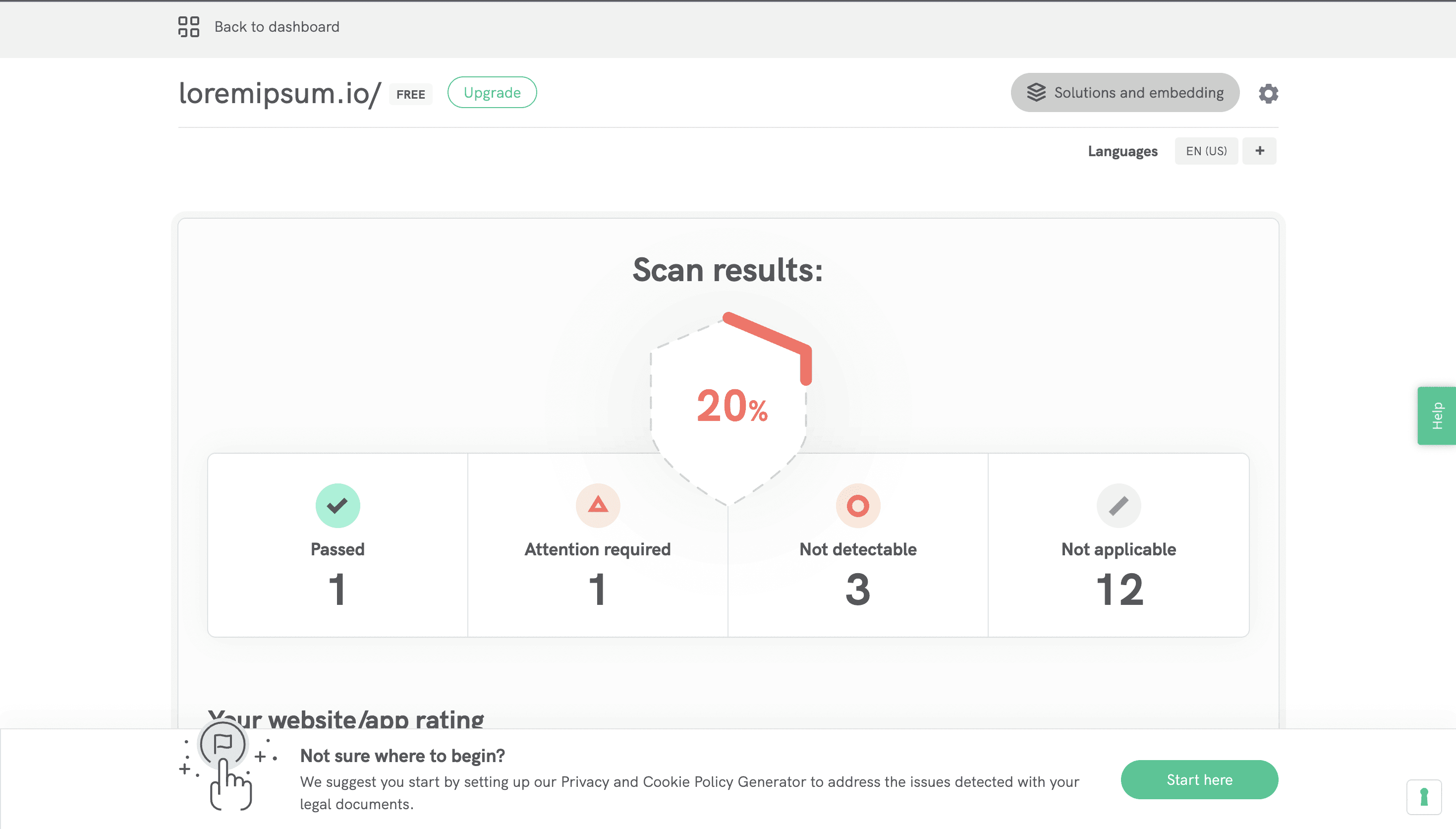
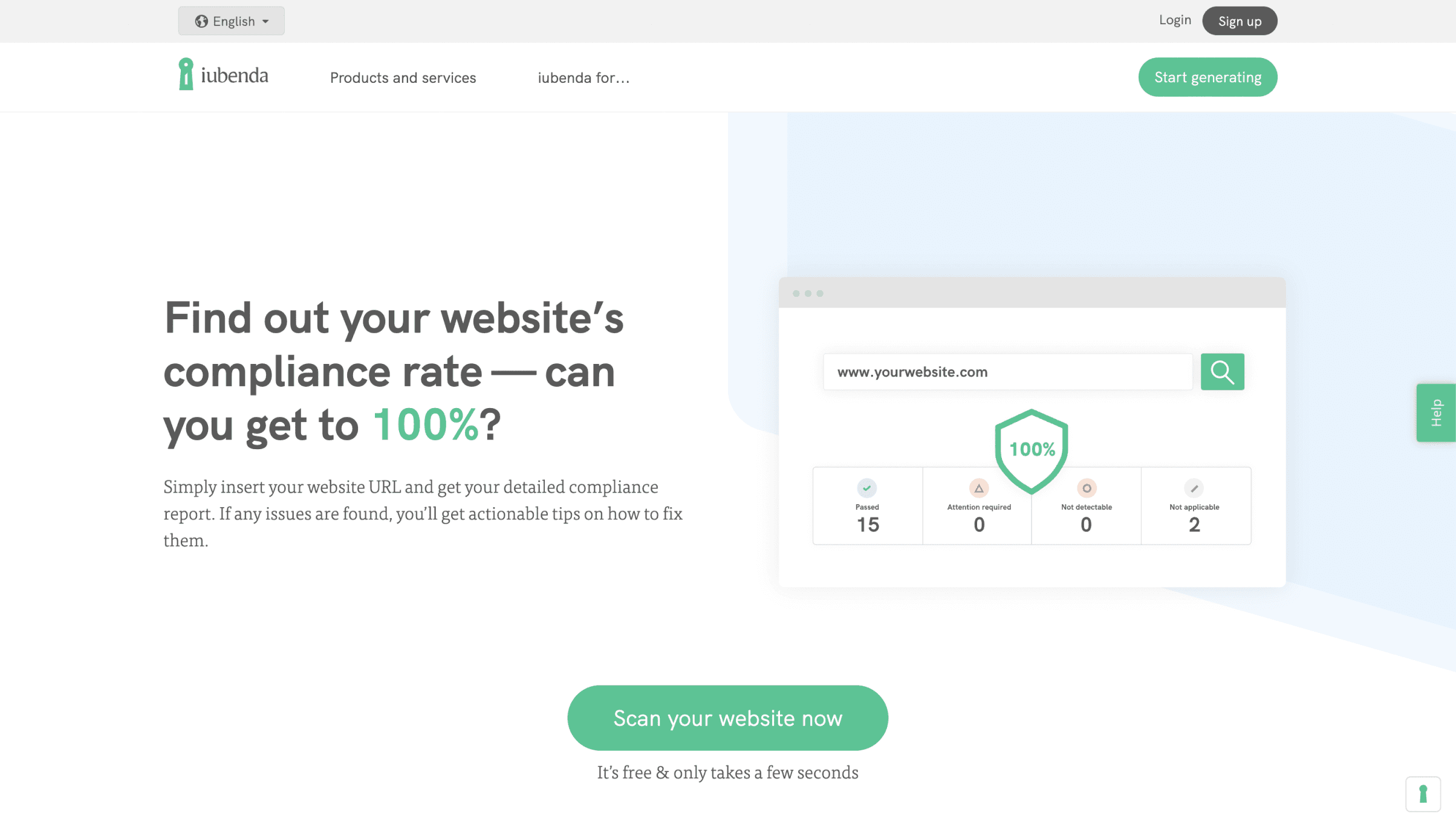
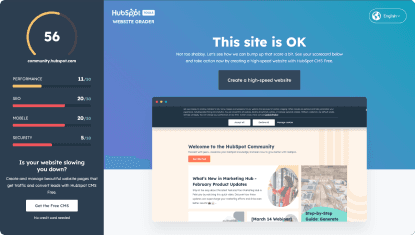
Competitive Analysis
IDEATION
Feature Brainstorming and Definition
Creating a System Flow
To gain a more comprehensive understanding of the product, I collaborated with the engineering team to create a system flow that mapped out both the frontend and the core elements of the backend.
At a high level, I defined three primary entry points: the landing page, a social media post, and the marketing site. Regardless of the entry point, users are directed to the landing page to input their information, followed by a loading page where the backend processing occurs, and finally the results page where insights are surfaced.
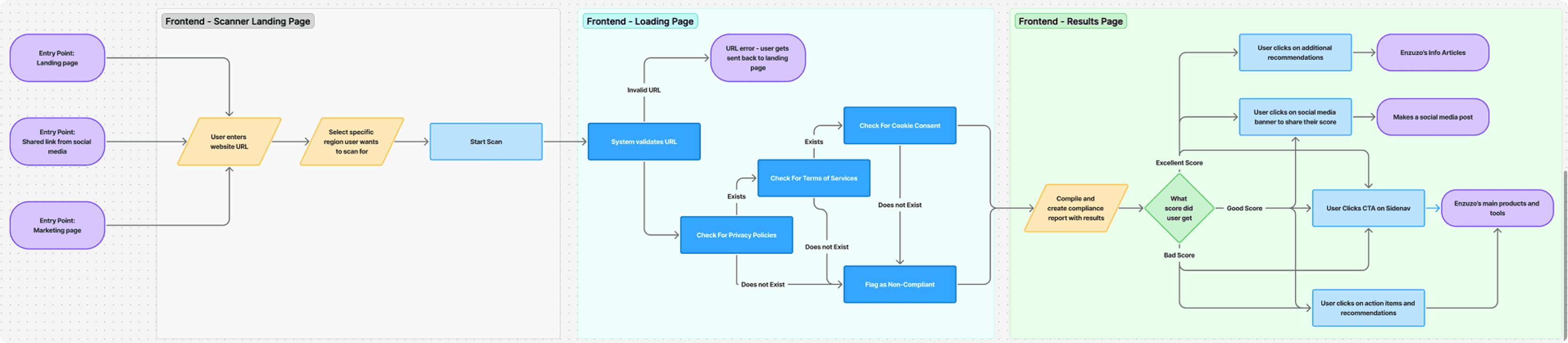
System flow diagram made on Figjam
Defining the Features
Before beginning any design work, I like to map out the key features and review them with the team. This helps us establish a clear understanding of the project scope and what needs to be designed. It’s also the stage where we prioritize features, identify the non-negotiables, and determine which items can be deferred to a potential V2.
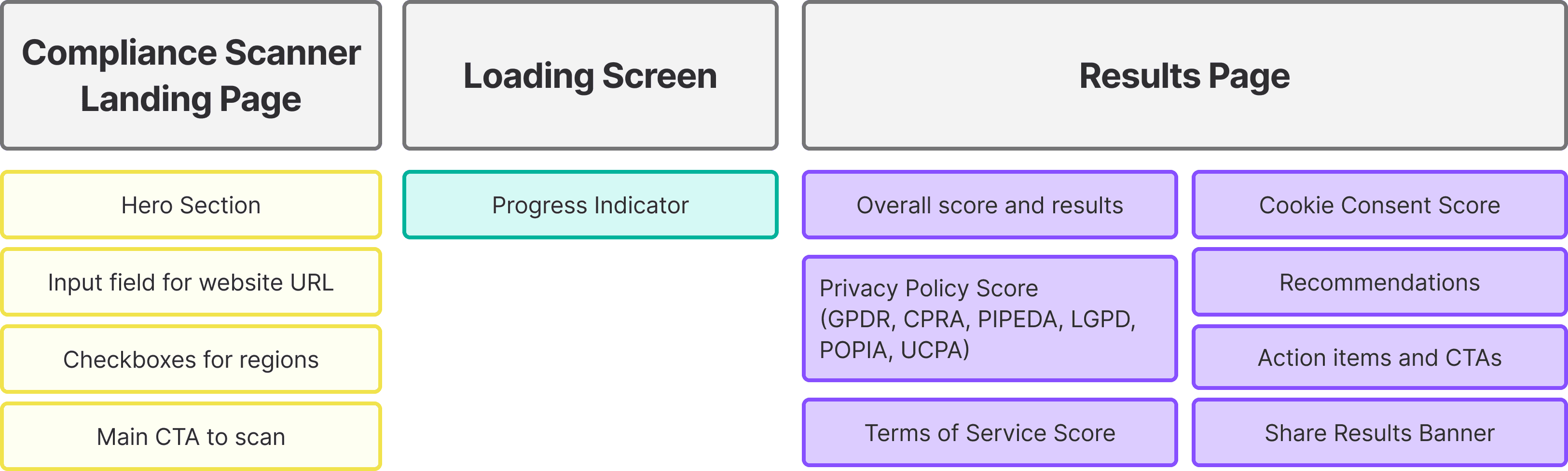
Mapping of the features we wanted to include
PROCESS WORK
Wireframing and Design Iteration
Creating Lofi Wireframes
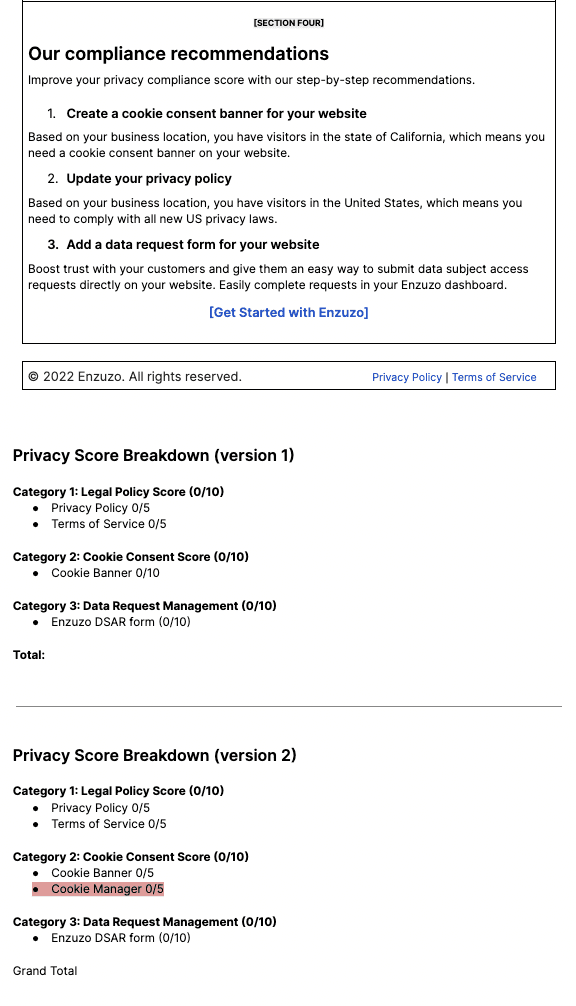
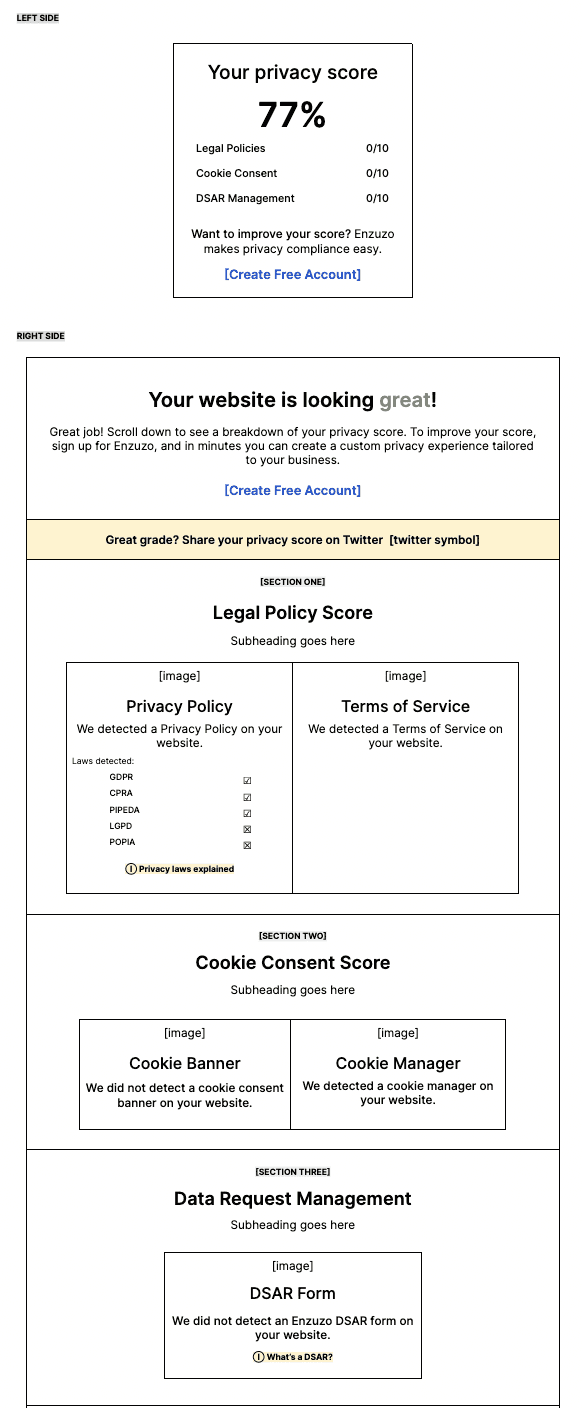
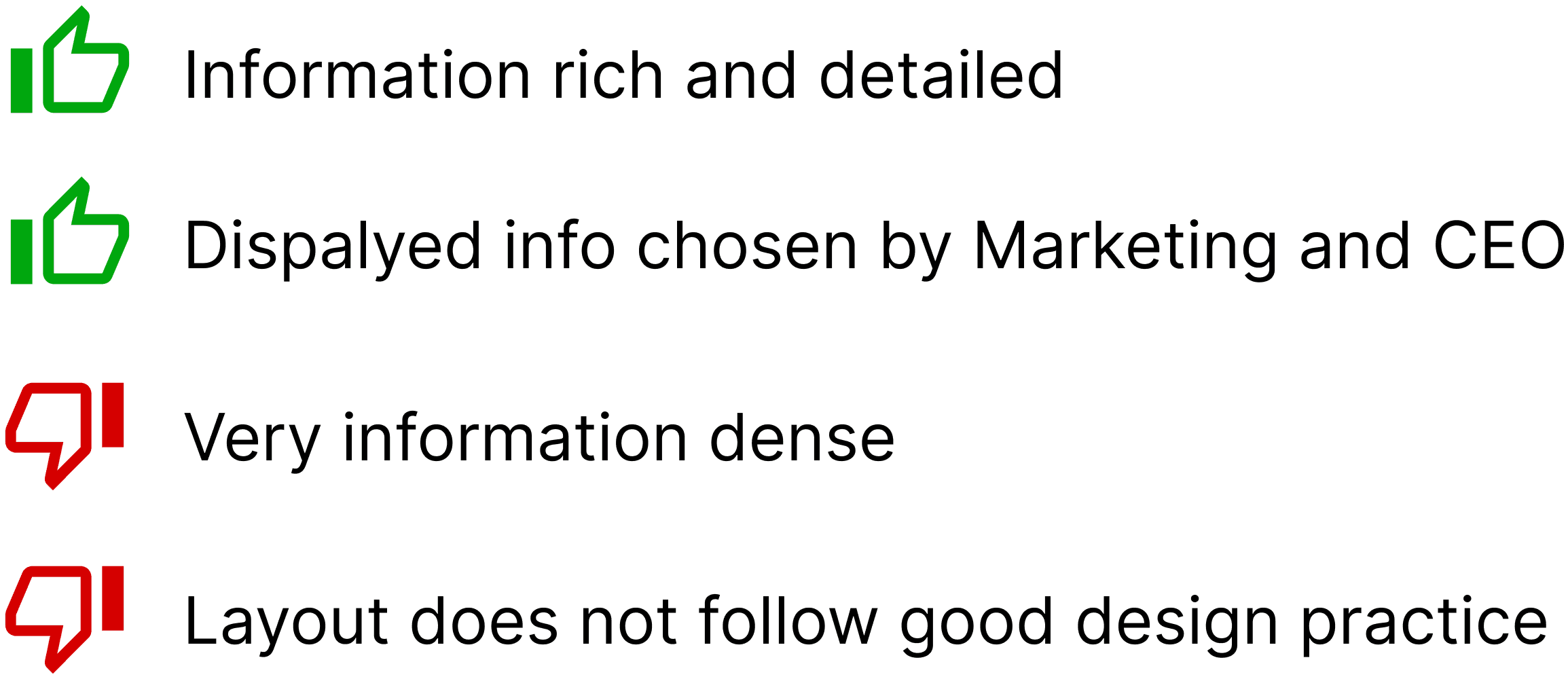
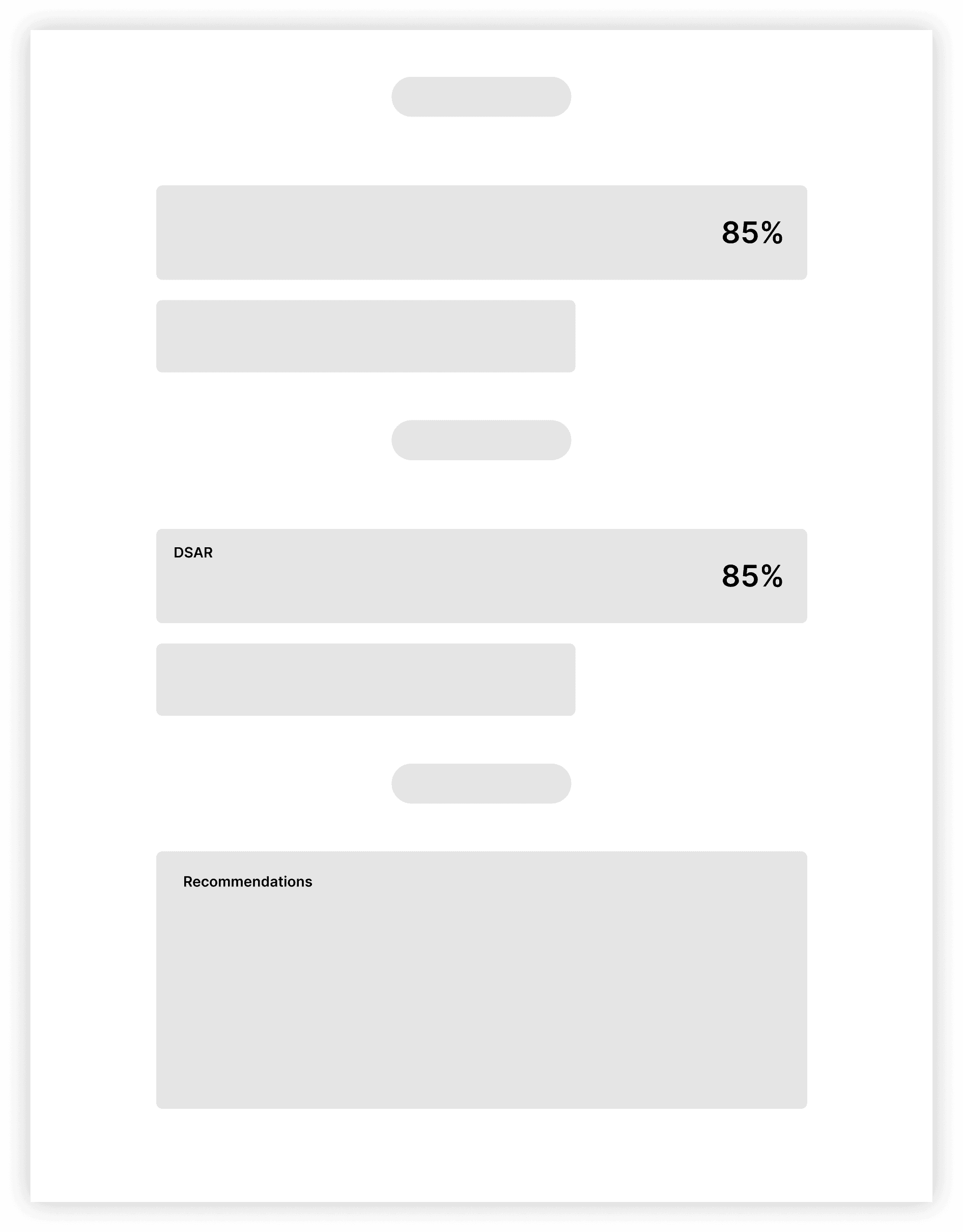
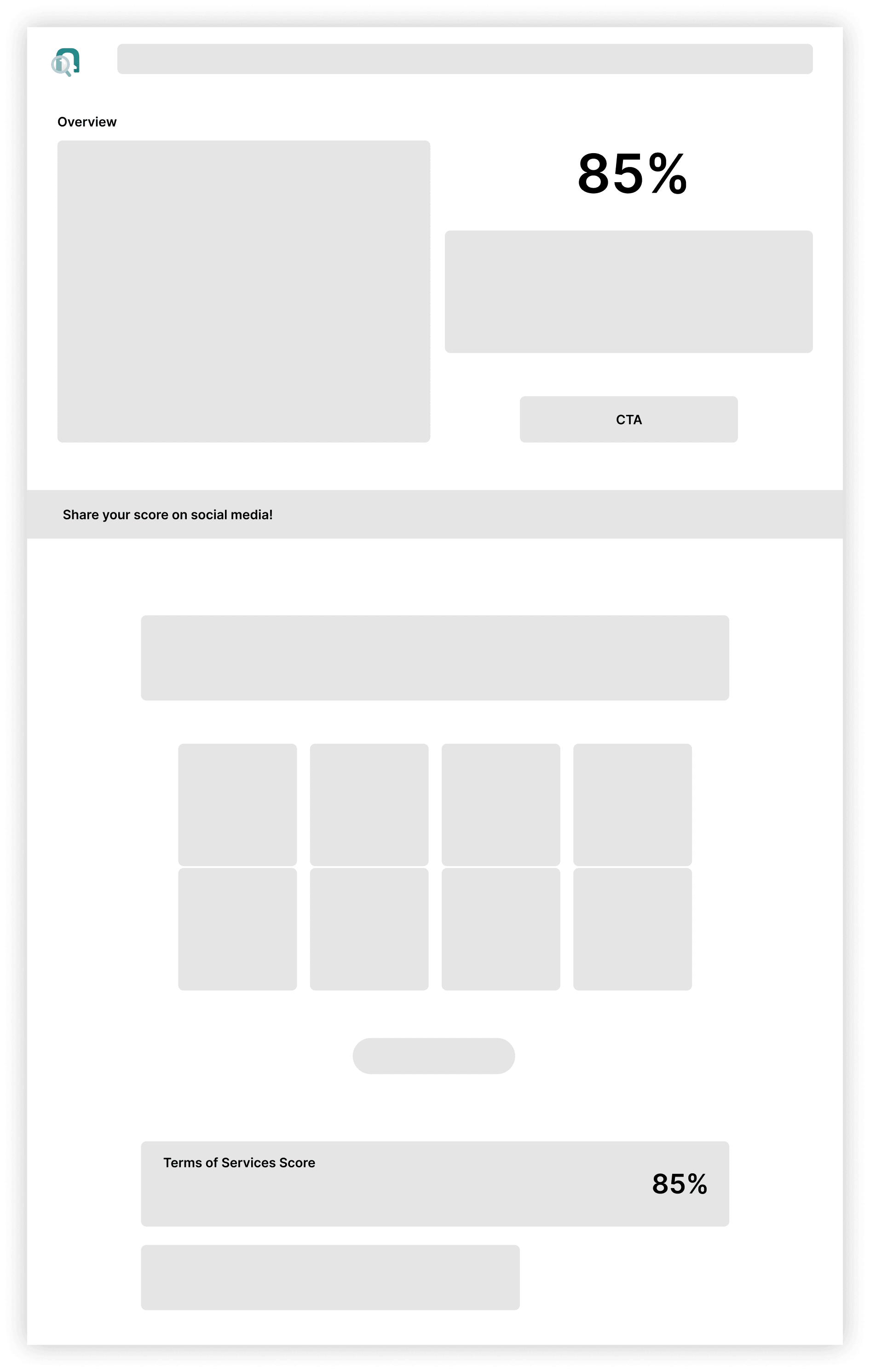
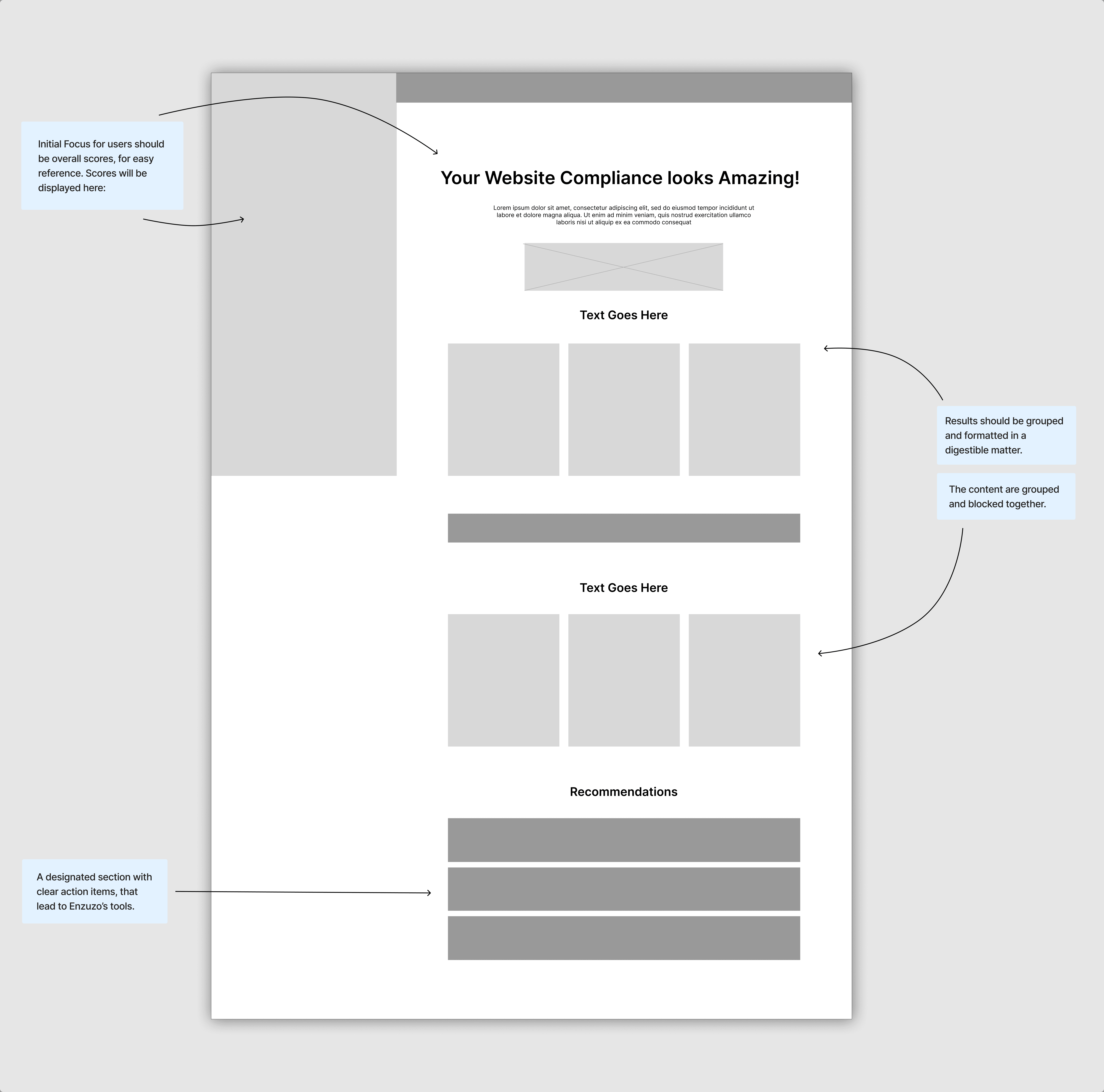
In collaboration with the marketing and engineering teams, we developed a wireframe for the scanner. This helped us to refine the overall structure, functionality, and features of the product.
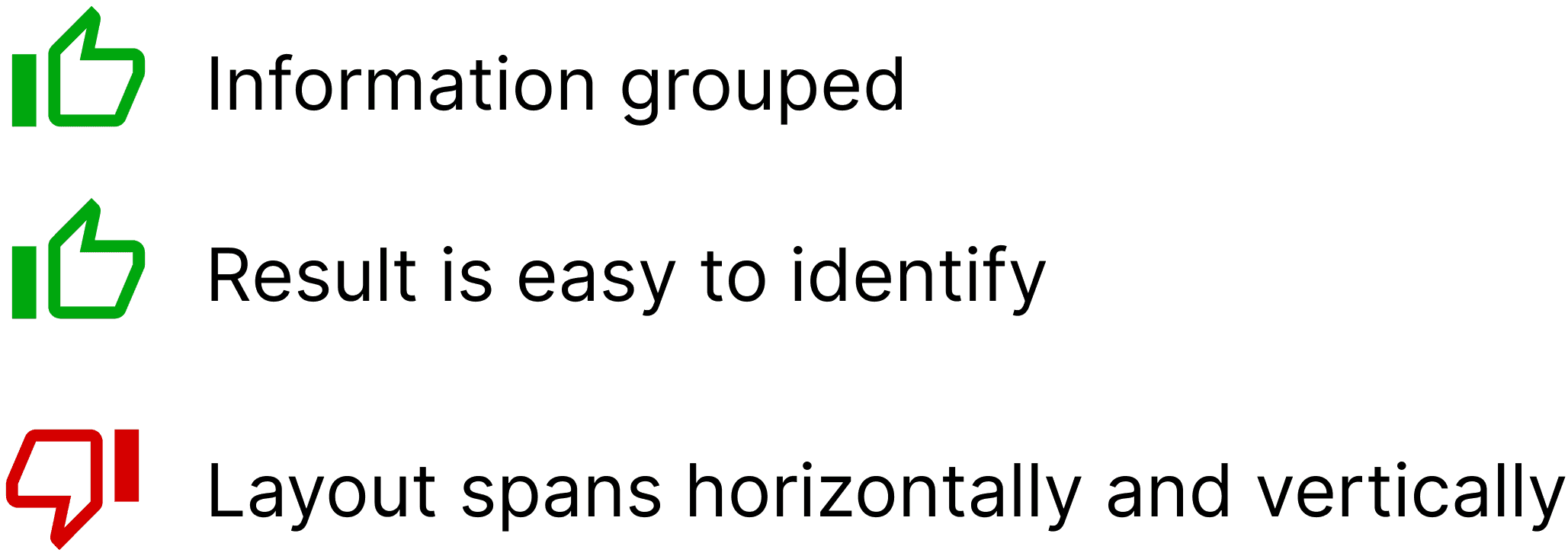
To ensure familiarity for users, we took inspiration from the structure of products of our main competitors like Iubenda. This follows Jakob's UX Law, which states that users subconsciously expect apps to work in a similar way to other popular platforms, as users feel less inclined to learn something completely new.
Iterate, Iterate, Iterate
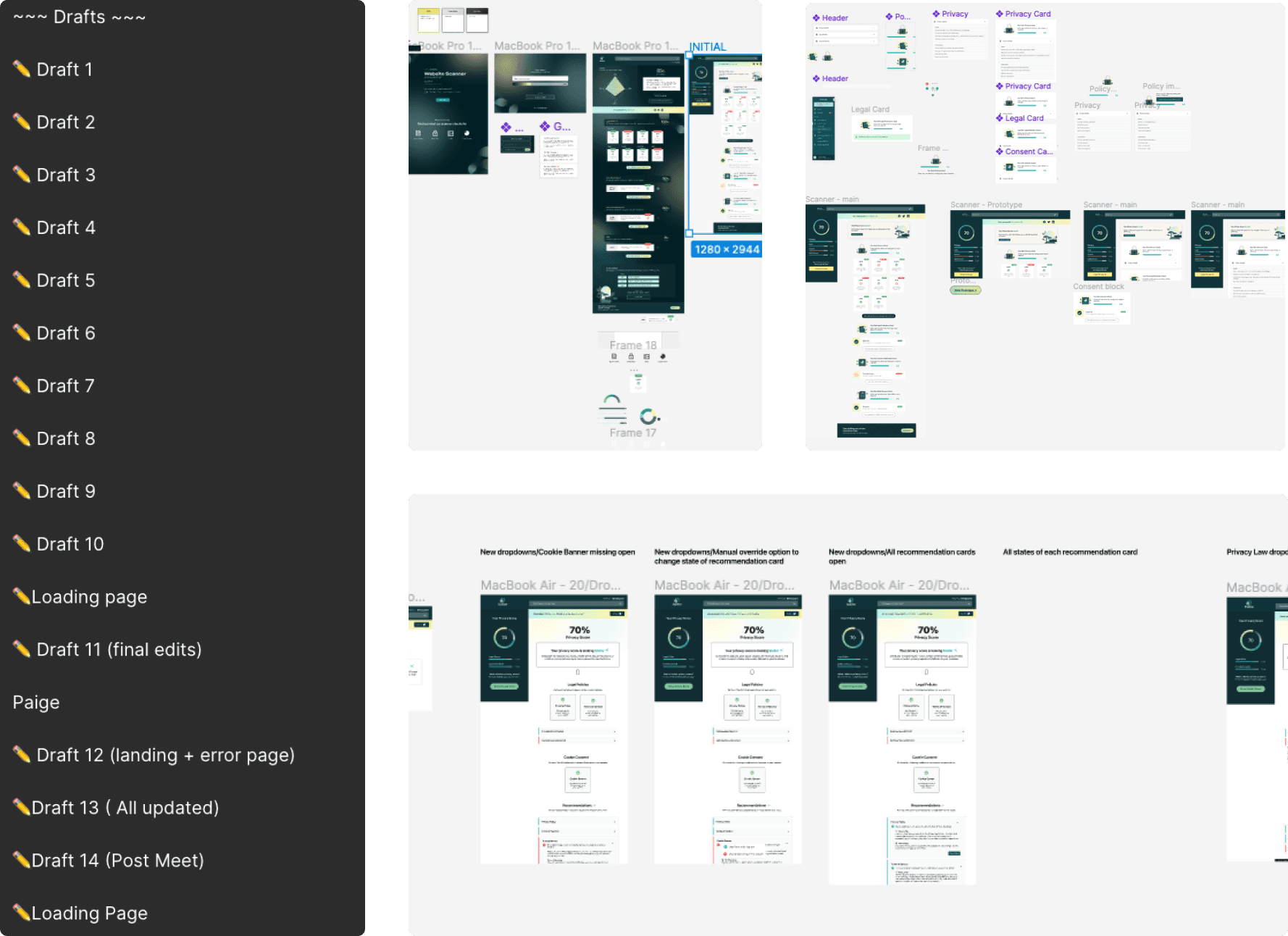
There were multiple rounds of iteration throughout the project. Our workflow was structured around weekly design reviews: I spent each week developing and refining the designs, then met with the broader team to gather feedback before incorporating it into the next cycle.
Several external factors also influenced the iterative process. When the project began, the product space was relatively new and largely untapped. Midway through, however, two major competitors launched similar offerings. This shift accelerated our timelines and required adjustments in our product direction. Ultimately, the scope was narrowed to align with technical feasibility and ensure a focused, timely release.
Experimentation
At the beginning of the project, the team encouraged broad exploration and unconventional thinking. As a result, the early iterations were intentionally experimental, focusing on bold directions in branding, component behaviour, and overall layout. While starting with a blank canvas provided a high degree of creative freedom, it also introduced challenges—namely, the need to balance exploration with the eventual constraints of usability, feasibility, and brand alignment.
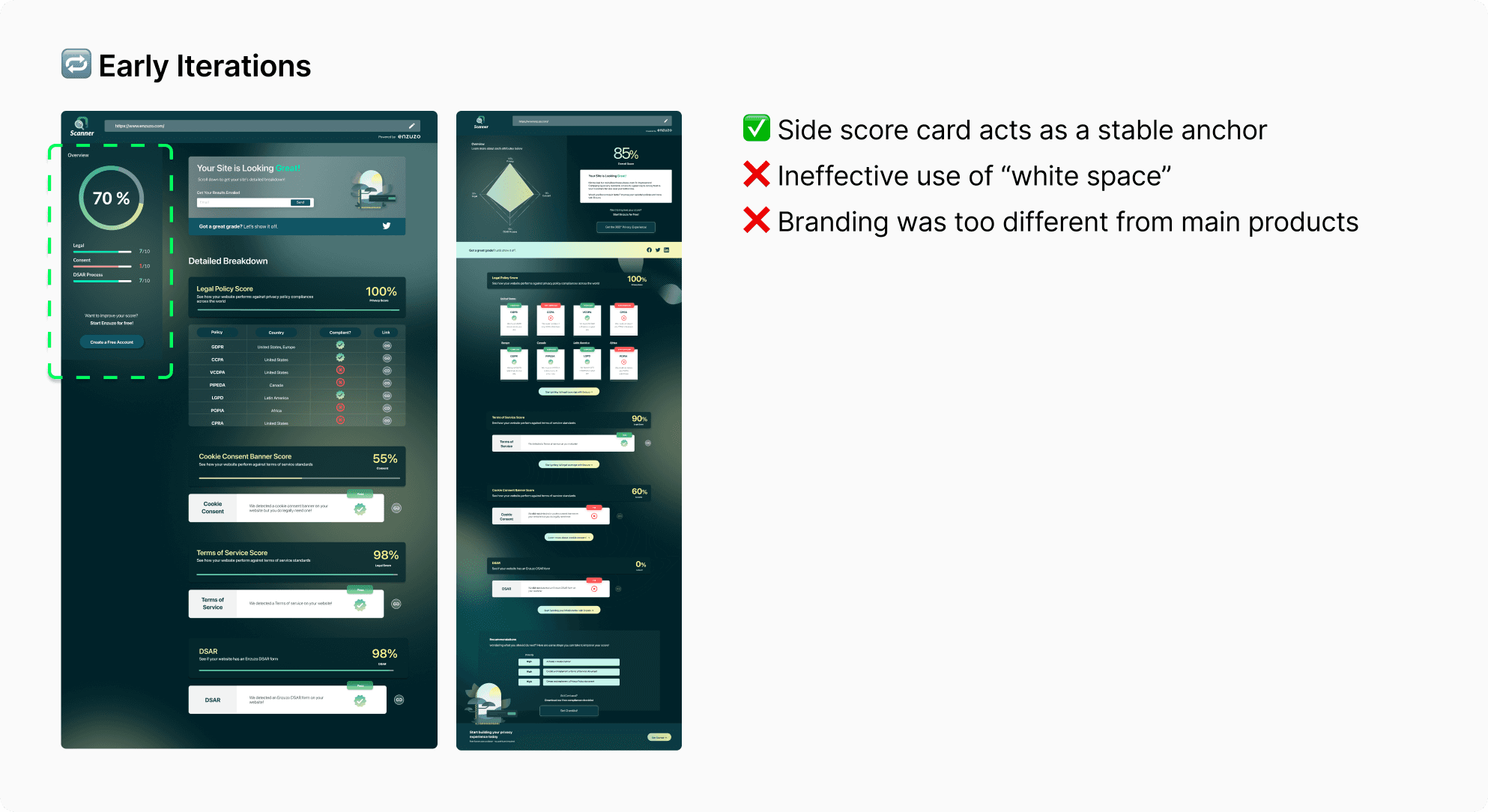
Examples of the earliest iterations
Later iterations focused on organizing dense information to stay scannable and approachable.
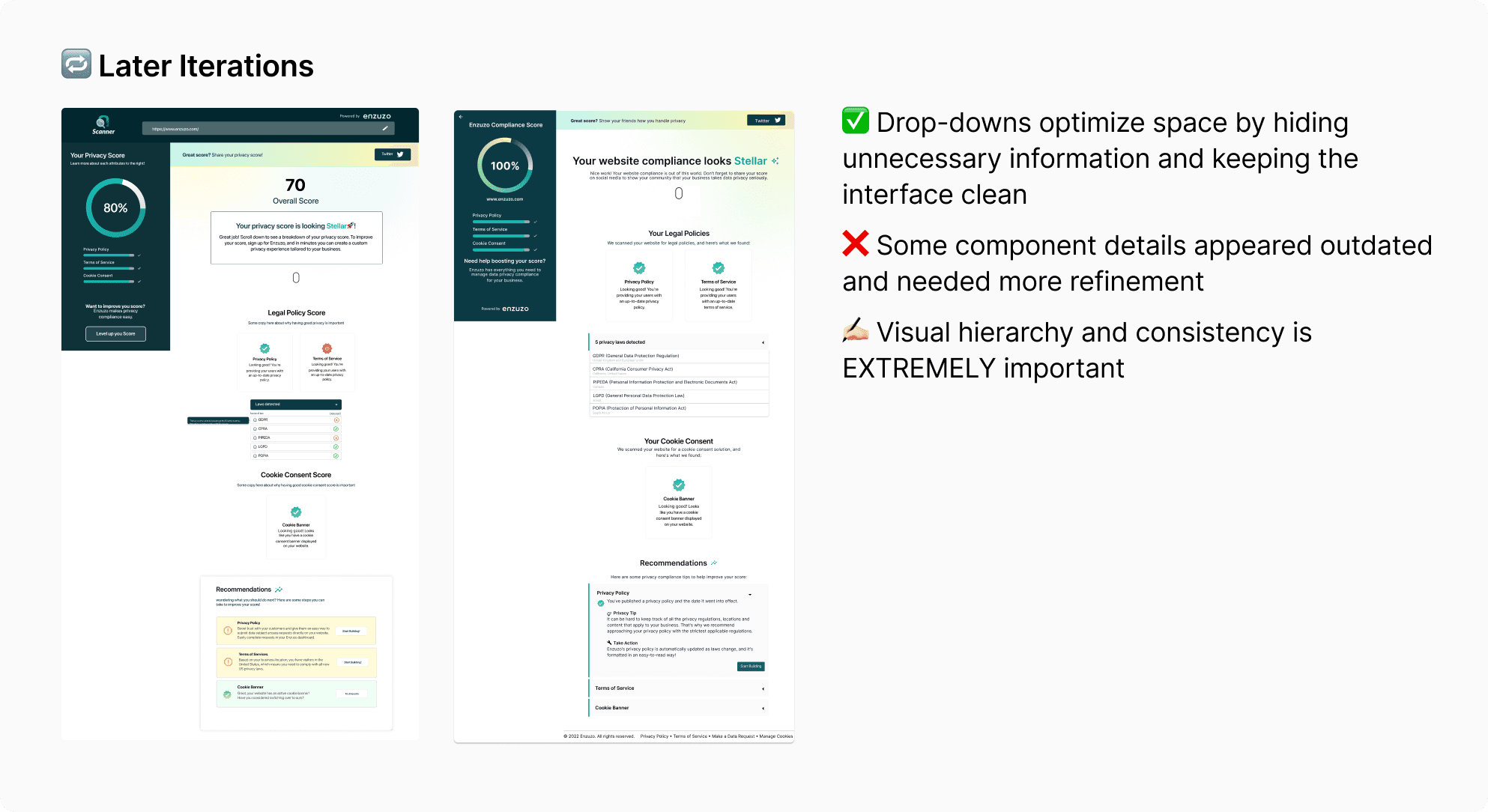
Examples of the later iterations
DESIGN
Final Designs
Result Cards
For each privacy law, there are result cards indicating whether the user's website fulfills the requirements in that specific region. Consequently, two distinct states exist, as demonstrated below. Depending on the state, there are accompanying CTAs provided to equip the user with resources that can assist them in enhancing their score.
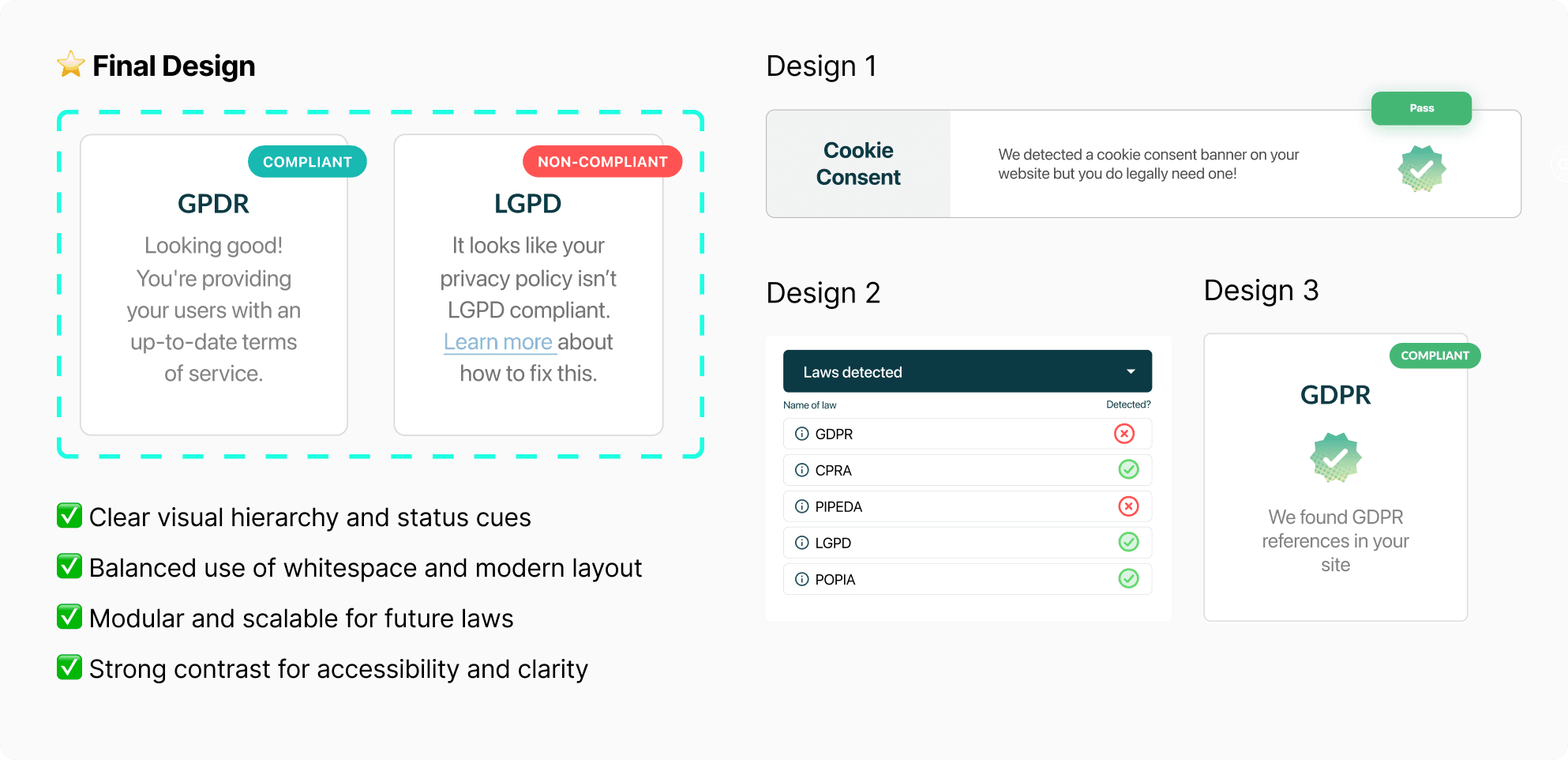
Different Versions of the Result Card Component
Recommendation Dropdown
This set of drop-down menus will effectively communicate to the user the specific regional laws that have been identified on their website. The laws will be categorized as either "detected" or "undetected," providing a clear and organized representation. This simplistic approach aims to help users easily understand and identify areas for improvement.
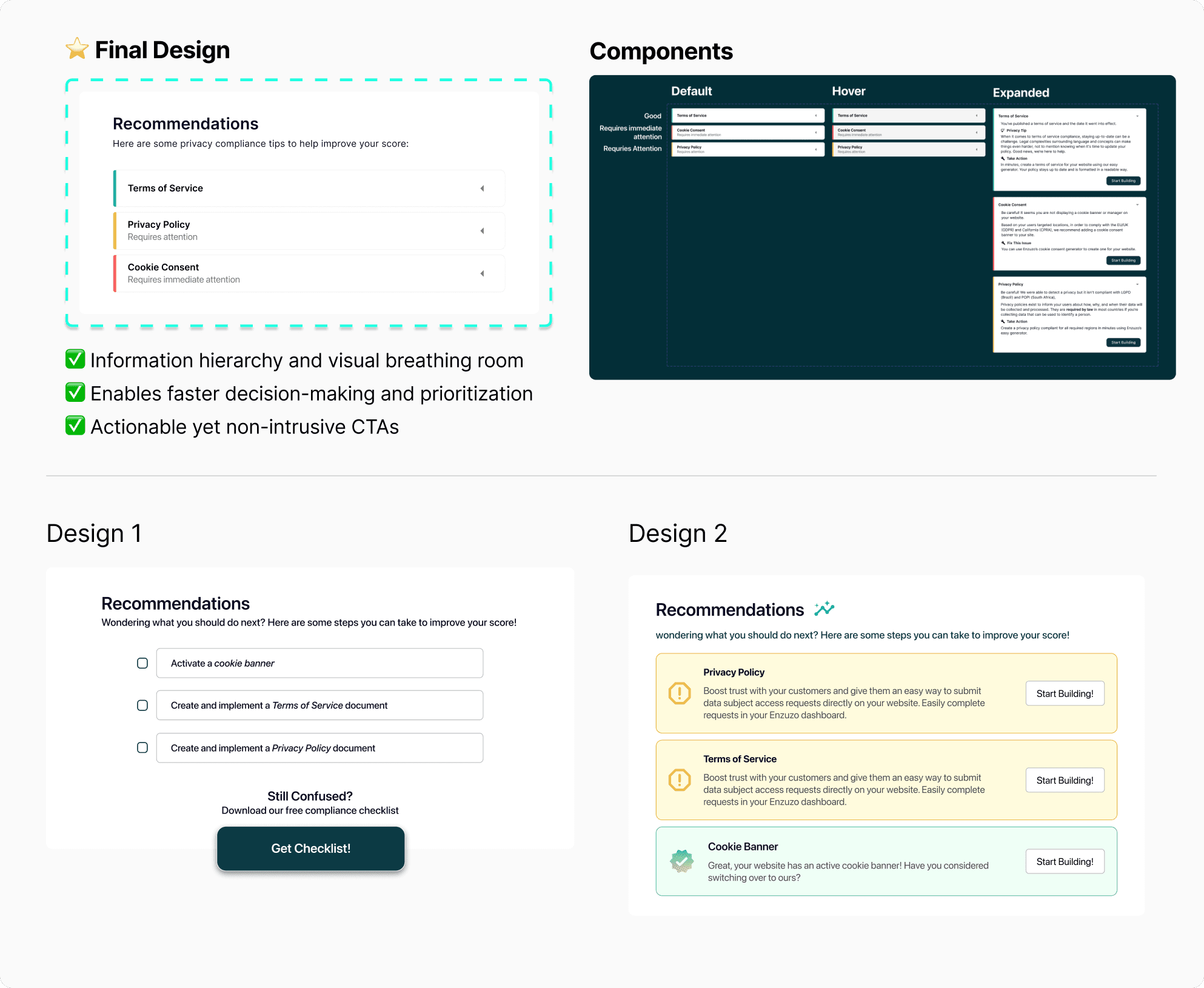
Different Versions of Recommendation Dropdown
Compliance Score Card
This feature enables users to easily access their overall score and view a more detailed breakdown of their score. Additionally, this feature provides an opportunity to place a call-to-action button that users can access at any time. I opted for standard colour themes to serve as indicators to assist users in easily recognizing the status of their website.
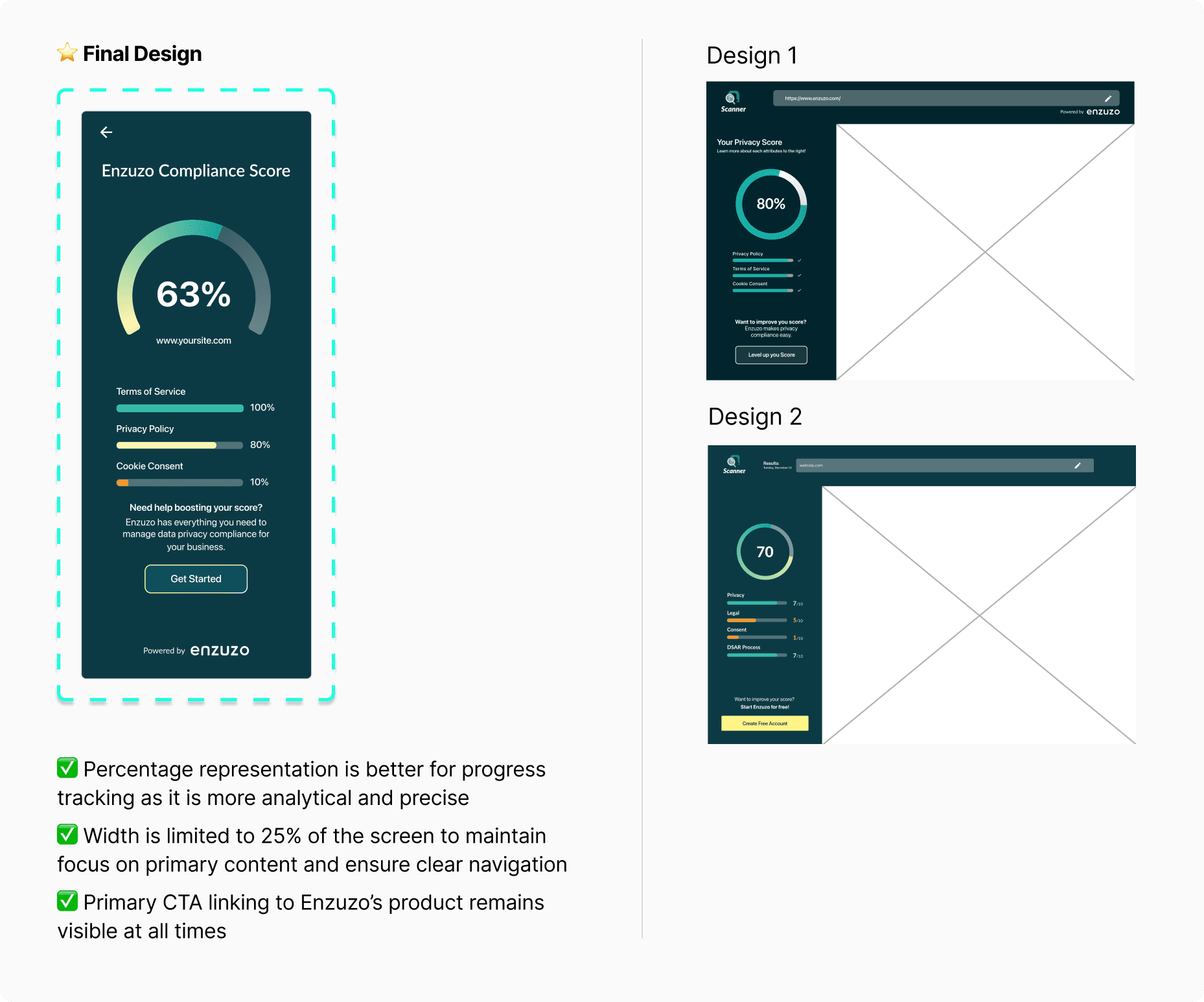
Different Versions of Recommendation Dropdown
DESIGN
Walkthrough
Thanks for Stopping By!
Got any ideas, questions or feedback? I’d love to chat :)